Open Problems for Freedom-Preserving Technology
1. Smart ingestion and retrieval of personal knowledge across applications
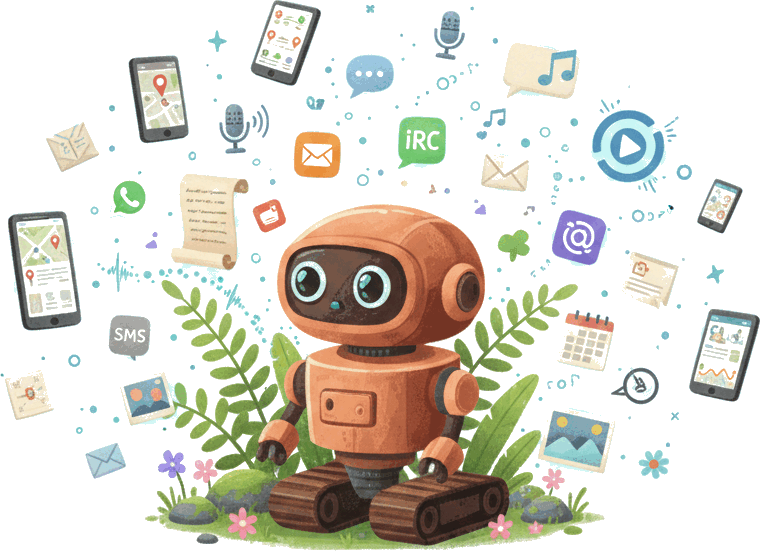
A truly advanced AI personal assistant should know and store securely all of your location history. History and transcriptions (if applicable) of phone calls and conference calls. All of your instant messages across SMS, WhatsApp, iMessage, Signal, IRC, etc. All your usernames and social graph on different platforms. Historical emails, list of contacts, calendar events. Old photos, both from your phone as well from other media, face recognition (if applicable) to understand whom was with you. What music were you listening to, both directly (like a Spotify) as well as indirectly (like an always-on shazam).
Google, Meta, and/or Apple probably already have this information, maybe on you device, maybe on their cloud. Try not to add companies to this list, but to reduce it.
2. Zero trust edge device network and compute security
On top of the currently existing firewall solutions, we need a network security solution that adds “weight” to expensive computation and networking. If your phone is sending gigabytes of information out, what created that outflow of information? Was it an app installed recently, or just access to wifi and high enough battery level that triggered a backup of a lot of photos you took while hiking through the day? If the CPU is hitting almost 100% usage, is it because of a 3D experience you launched, or because some rogue application is mining cryptocurrency on behalf of a foreign hacker?
3. Cross-platform user validation
A certain John messages you on Discord. You never talked before, but he claims to be John, a colleague of yours from a previous job. Is that true? Answering this question, from the side of the platforms, is an NxM problem: all platforms would need to integrate with all other platforms in order to really fix this issue. We need some sort of universal protocol to achieve it, like what Keybase used to do, but not corporate-owned. I’m excited to see if AT Protocol gets to achieve this (and more).
4. Tools for POSSE and universal aggregation
POSSE is an abbreviation for Publish (on your) Own Site, Syndicate Elsewhere. Universal aggregation, if truly well done, would mean that all the data on platforms that you visit gets first downloaded on a personal “data cargo port”, and displayed to you by your algorithm of choice, not someone else’s.
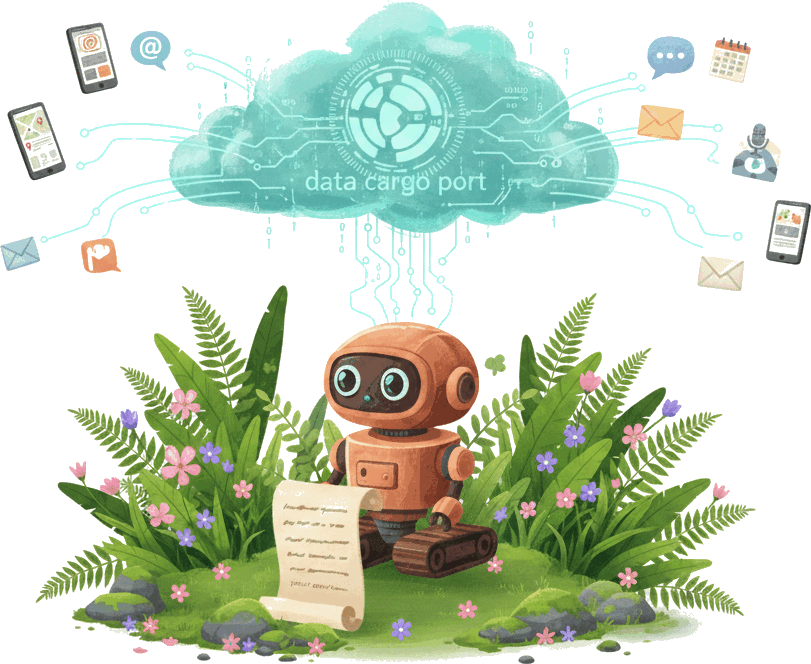
This practice, enabled by the upcoming onslaught of extreme personalization of the computing experience, will greatly reduce the weight and power of companies that need control over your experience in order to push ads in front of you (Google, Meta, X/Twitter). It’s going to be hard for them to prevent it: as soon as data leaves their servers, there is little recourse they have to control where does it end up.
Your algorithm could also take as input “gossip” communicated through a P2P network, filtered by some low-cost neural network of your interests, with information from your peers and what they have been up to (see also Subjective Multidimensional Opinions).
5. Basic cross-application essential LLM/AI/ML tooling
A very fast on-device LLM with great tool use and grammar skills, a very
powerful thinking model, a standardized “anonymization” function by an LLM that
smudges data in a reversible way, so data can be provided to external public
LLMs and the results turned back to you (so one can ask some Gemini for
example: “Please summarize this conversation with MariaSilvia”, replacing
all PII with aliases that can be reverted). Audio tools, like live
transcription, dictation, conversation turn detection, and diarization, and
embedding models that run locally.
6. Cognitive graphs of thought
Richard Feynman got his Nobel prize for the invention of a new way of expressing interactions between particles. In our time, there are two things that escape easily understandable reproductions of complex systems: one is Game Theory, the other is Machine Interpretability. Anthropic’s Golden Gate paper is one of the best pieces of work on this subject, but we’re pretty early! And in game theory or systems thinking, there just isn’t much. Causal loop diagrams, or stock and flows are the closest thing, but they can only represent a limited set of interactions of complex systems. In game theory, the famous reward tables is the most advanced visualization of simple games we have.
With the advent of AI, maybe we can finally create some ontology expressed in OWL or a Scheme-like description that can be used to “speak the same language” and detect flaws in our reasoning. In this regard, OpenCog looks promising, but we still don’t have a way to visualize or create and query graphs of thoughts.
7. Reality oracles from the ground up
Local networks of sensors, antennas, redistribution of data, citizen journalism and tighter inter-personal bonds are necessary for a democratic society. Particularly, local populations have been dangerously weakened against their governments by modern business practices. Things like alpr.watch would improve the situation.
Afterword
Having outsourced all our compute to the cloud generated massive societal power for the owners of those datacenters, the new Feudal lords. The advent of generative software in the hands of everyone poses a unique opportunity for societies to reclaim their power. Stop using apps with algorithmic feeds. Start running your own servers!